Odds of winning an Oscar? One in 11,500.
As a child, I was captivated by the magic of movies. One of my earliest memories is watching Cary Grant dodge a crop duster in "North by Northwest" — a film nominated for three Academy Awards in 1959 but ultimately came up empty-handed. As a former documentary filmmaker, I've always been curious about what it takes to win a golden statue.
You can't approach baseball from a statistical bean-counting point of view. It's won on the field with fundamental play. — Moneyball, nominated for six Oscars.
As a data scientist, I've come to appreciate that predicting outcomes in the movie industry takes more than machine learning. It requires talented individuals who can write a great screenplay, someone with a vision, and a crew that can bring the film across the finish line. But the data tells its own story.
The Approach
I gathered data from other award ceremonies, critics' scores, and historical data spanning 1980 to 2016. I analyzed correlations between awards, release dates, ratings, and running time before running them through predictive models.
A total of 3,096 Oscar statuettes have been awarded since the inception of the award through the 91st ceremony. Winners are chosen from 24 categories — I selected eight for my model, leaving out technical awards.
Key Findings
The top three awards that precede the Oscars are BAFTA, Golden Globes, and the Guild awards. Releasing a motion picture in Q4 and Q1 is advantageous — it's close to award season and helps during the campaigning process while the film is fresh in Academy members' minds.
Most films that win an Oscar are R-rated. And the sweet spot for runtime? A motion picture with a running time of 123 minutes has the highest chance of winning.
The Model's Predictions
The model predicted a 55% probability for the leading candidate to win Best Picture, driven by three factors: a 96.0 Rotten Tomatoes audience score indicating widespread popularity, strong box office performance, and a high star count indicating strong acting talent.
Box office performance emerged as a significant factor in partial dependence analysis — fans supporting their favorite films at the box office can influence outcomes beyond what the Academy alone decides.
The Predictions
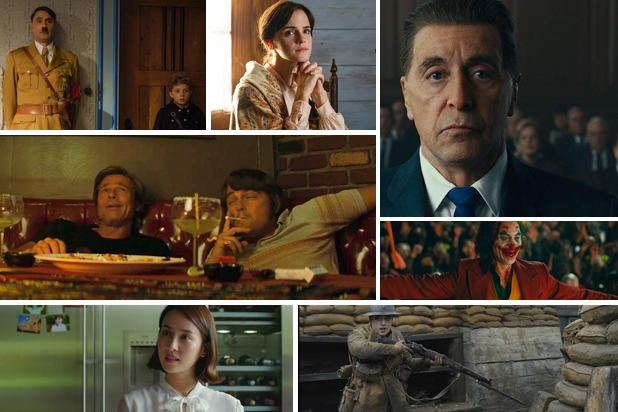
The model predicted: "The Irishman" for Adapted Screenplay. Noah Baumbach's "Marriage Story" for Original Screenplay. Joaquin Phoenix for Best Actor in "Joker." Renee Zellweger for Lead Actress in "Judy." Brad Pitt for Supporting Actor in "Once Upon a Time in Hollywood." Laura Dern for Supporting Actress in "Marriage Story." Sam Mendes for Best Director for "1917." And "1917" for Best Picture.
While the model provides a glimpse into who might win, there's more to winning an Oscar than statistics and machine learning. Nonetheless, this project was where my two worlds — film and data — first converged.